

Tracking updates may be delayed due to a system upgrade and severe winter weather. Thank you for your understanding and patience.
Glass sphere
Deep-sea exploration is a critical domain in marine scientific research. Optical detection equipment such as neutrino telescopes require long-term stable operation under extreme high-pressure conditions in deep-sea environments. Such devices typically need to be housed in transparent pressure-resistant enclosures to protect delicate internal components from high-pressure seawater corrosion while maintaining optimal optical detection sensitivity.
Current manufacturing technologies for deep-sea glass spheres face three major technical challenges:
- As dimensions increase, maintaining uniform material properties and mechanical strength becomes increasingly difficult;
- Large-scale glass formations are susceptible to internal stresses and structural defects during molding, with fabrication complexity escalating exponentially with size;
- Existing manufacturing processes yield glass spheres with sub-90% light transmittance, significantly compromising optical detection sensitivity.
These limitations critically constrain the development and deployment of large-scale deep-sea optical detection systems.
To address these challenges, we have developed an advanced glass sphere specifically engineered for deep-sea applications that meets stringent requirements for large dimensions, exceptional pressure resistance, and superior optical transparency.
17-inch and 23-inch Glass sphere For deep-sea exploration
Performance Characteristics:
Large size and high pressure resistance, capable of withstanding water pressure loads in deep-sea environments, and maintaining a transmittance of over 90% in critical optical bands, meeting the high transmittance requirements of deep-sea optical detectors.
Install:
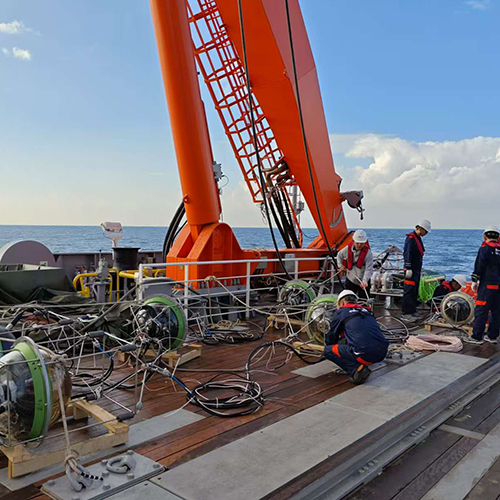
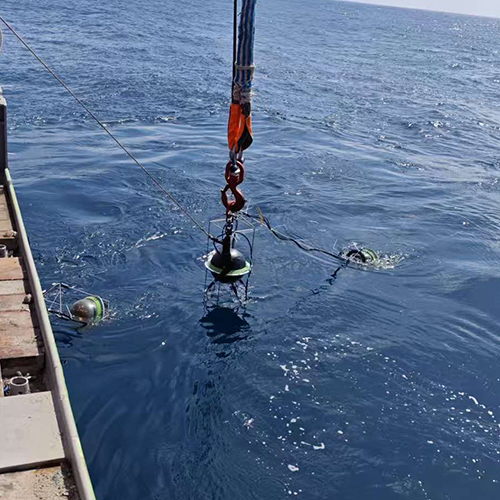
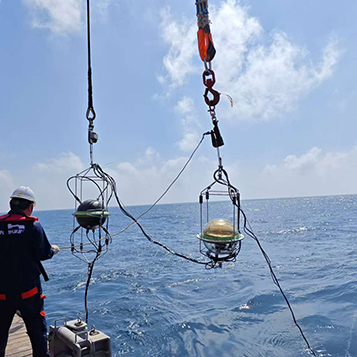
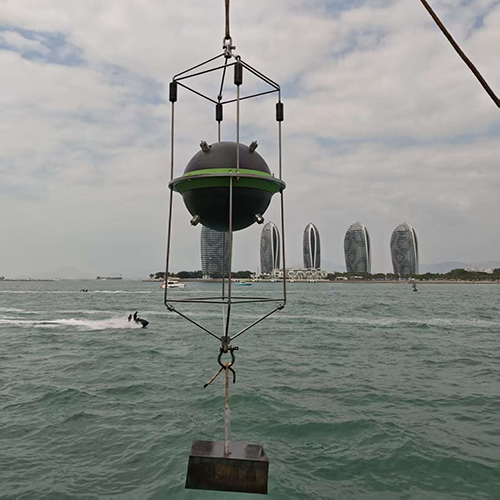
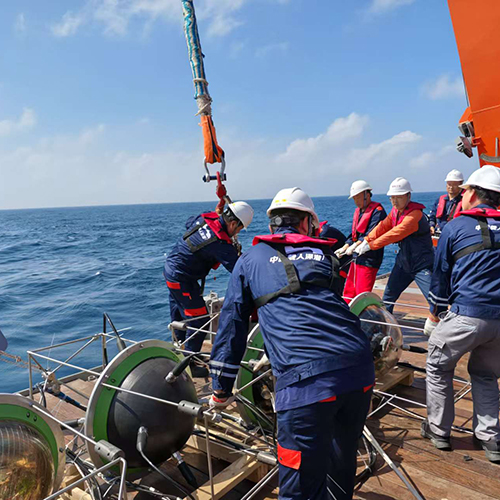
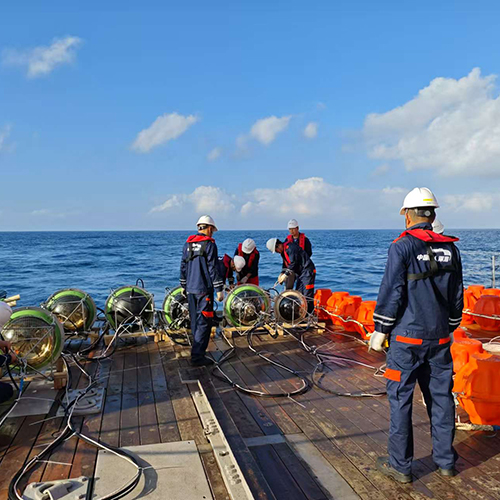
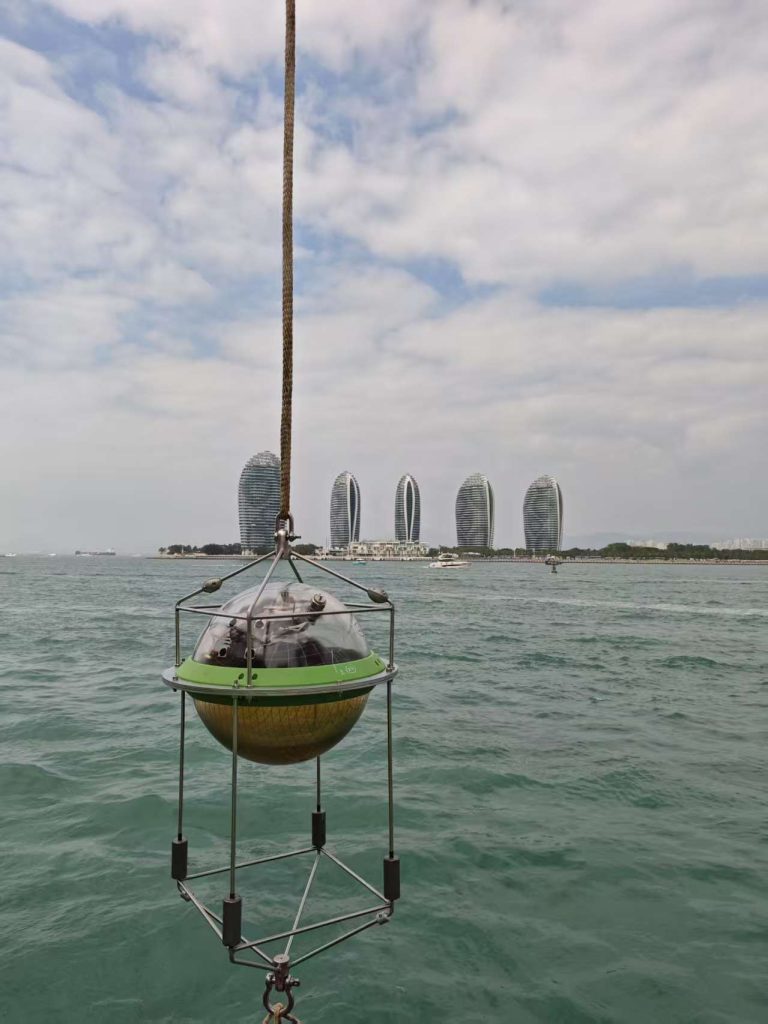
The present invention relates to the technical field of marine detection equipment, and provides a glass sphere manufacturing method and a glass sphere. The manufacturing method of the glass sphere comprises the following steps:
S1: Perform pressure-resistant simulation analysis based on the target operating depth and water pressure requirements to determine the external diameter dimensions, wall thickness, and weight parameters of the glass sphere;
S2: Prepare glass raw materials according to the following weight percentages: 11% to 13% of B₂O₃, 80% to 85% of SiO₂, 2% to 3% of Al₂O₃, 2.5% to 3.5% of NaCl, and a total of 0.5% to 1% of Er₂O₃ and H₃BO₃, and melt the glass raw materials into a glass melt;
S3: Select an appropriate amount of the glass melt according to the weight parameters determined in the pressure-resistant simulation analysis, place it into a mold, and apply a preset impact pressure and duration for one-time impact molding;
S4: Further process the impact-molded body into a glass sphere.